Sedalia Water Pollution Control Division manages the city wastewater system. The city sewer utility checks whether a problem in the municipal sewer main may be causing a reported backup. Inside the affected property, the immediate work is to restrict contact with sewage, document the fixtures involved, and arrange cleanup that follows every surface reached by the release.
Key takeaways
- Report the affected fixtures and whether waste water is still rising.
- Keep occupants away from contaminated floors and connected rooms.
- A sewer investigation and indoor cleaning address different parts of the loss.
- Porous material and concealed edges need explicit handling decisions before drying.
Describe the fixture pattern when reporting the backup
A report should identify which fixtures are affected and what happened when the backup first appeared. Water rising at a low drain while another fixture is used gives the investigating professional a useful observation.
The property owner should avoid repeated flushing to test the problem.
The city utility can check whether the municipal main is involved. The owner should also arrange the appropriate investigation for the property plumbing as needed.
Notes from each contact should state what was examined, what was found, and any next action recommended.
The sewage backup cleanup page covers the interior response once waste water reaches building materials. Source investigation should be coordinated with cleanup so a continuing backup does not contaminate a surface that has just been treated.
- List the drains, toilets, and rooms where water appeared.
- Record whether the level changes when a fixture is used.
- Stop unnecessary water use while the source is being investigated.
- Keep the utility response and plumbing visit notes together.
Use local obstruction information to ask better questions
The city identifies disposable wipes, rags, fats, oils, and grease among causes of sewer obstructions. It also warns that roots can enter a sewer lateral during drought or dry periods.
Those categories help organize questions for the person investigating the affected drain.
The actual obstruction should be described from the inspection findings. A cleanup crew should not assign the source merely from the appearance of the indoor spill.
The plumbing record can identify the location, recovered obstruction, condition observed, and recommended followup work.
Prevention advice should follow that diagnosis. A household may need different corrective work for a damaged connection than for material lodged in a drain.
The owner benefits from a written recommendation that names the issue found at the property and the action intended to address it.
Keep contaminated movement inside a controlled work area
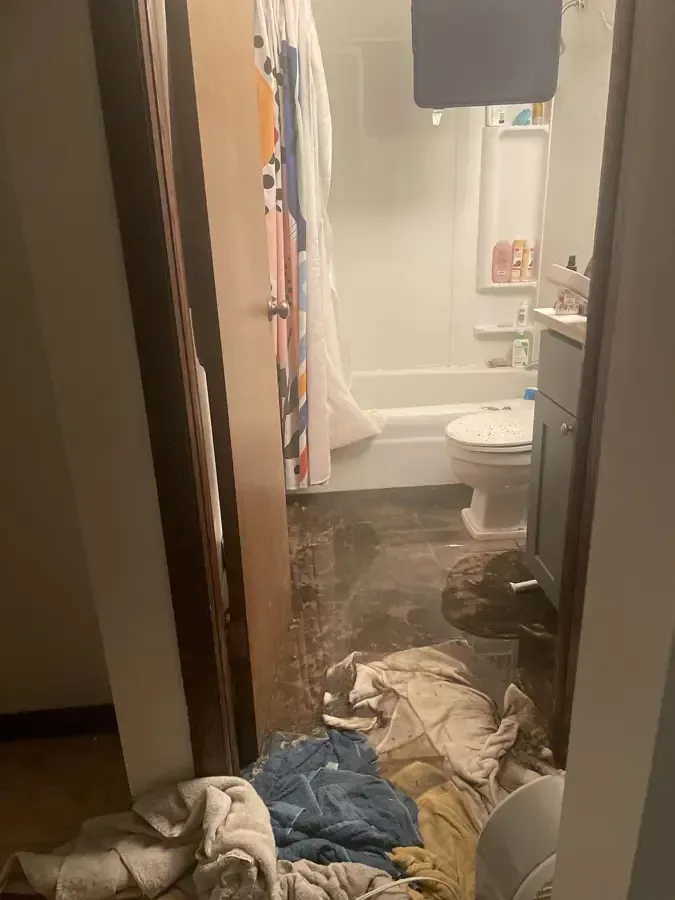
Sewage on a bathroom floor can move beyond the fixture on shoes, tools, or wet belongings. The affected boundary should include any path where that movement occurred.
Occupants should stay clear while the team establishes a controlled route for personnel and removed material.
A household fan should not be used to blow across untreated waste water. Cleanup planning comes before airflow directed at contaminated surfaces.
The crew should explain its protective measures and where equipment will be placed without obstructing the safe exit route.
Pets, children, and anyone who does not need access should remain outside the work area. Essential belongings can be addressed through the crew rather than retrieved by walking across the spill.
The room record should identify adjacent spaces checked for tracking or seepage.
- Close access at the doorway before belongings are carried out.
- Identify any footsteps or wheel tracks beyond the wet boundary.
- Keep used cleanup equipment separate from household storage.
- Arrange a clean route for occupants leaving the property.
Decide what can be cleaned before relying on drying
Waste water reaching carpet, padding, wall finishes, or cabinet components raises material specific questions. The cleanup team evaluates contamination, porosity, condition, and accessibility.
Drying alone is not a substitute for the removal or cleaning needed because of the exposure.
Hard surfaces also need attention at joints, edges, and concealed spaces. A tile face may be accessible while the area beneath an adjacent cabinet remains hidden.
The scope should explain which surfaces were reached and which require an opening or specialist handling.
The owner should receive a clear list of retained and removed materials by room. Photographs taken during removal show layers that will be concealed again later.
Keeping that record makes the repair boundary understandable and supports a focused handoff to the next contractor.
Remove contaminated liquid without spreading the work zone
Recovery equipment needs to match the liquid and debris present. The crew should plan hose placement, collection, and handling before extraction begins.
Cords and hoses must not force occupants through the affected room or create an uncontrolled path into clean living space.
As the standing waste water clears, the team can inspect low edges and trapped pockets more closely. A wet threshold may connect the bathroom to flooring in the hallway.
The work boundary should expand when those observations show contact outside the initial spill area.
Water extraction is part of the response, followed by cleaning and material decisions specific to sewage exposure. The job record should distinguish recovered liquid from the cleaning of retained surfaces.
An empty floor is only one part of the completed cleanup.
- Protect the clean end of the equipment route.
- Record newly exposed wet edges as fixtures or contents move.
- Keep disposal handling within the established cleanup plan.
- Check the adjoining threshold before removing room restrictions.
Track retained material after cleaning is complete
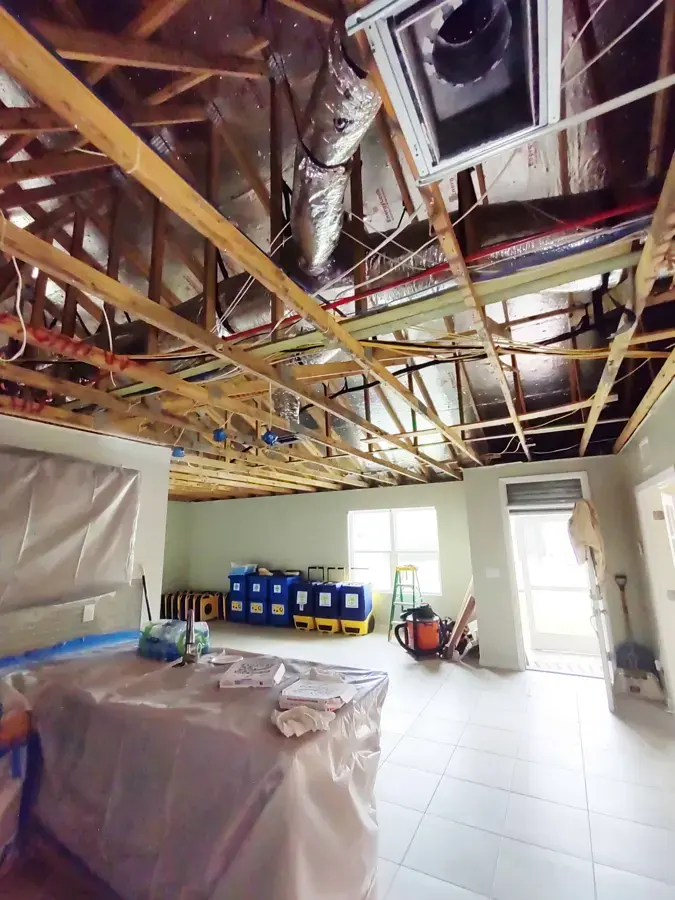
Cleaned framing or other retained components can still hold moisture. Their drying plan should identify accessible surfaces and suitable measurement points.
Equipment placement should follow the cleaned work area rather than carrying airflow through untreated contamination or blocked cavities.
The structural drying service records how those retained components respond. If a location remains wet, the team should reconsider concealed layers and access.
The completion decision needs both the cleanup condition and the moisture condition of the retained material.
A source correction should remain documented separately. Restored drainage allows normal fixture operation, while a drying record explains the building condition after the release.
Neither record should be omitted simply because the other contractor has already finished a visit.
Finish with a fixture record and a room record
Before ordinary use resumes, the responsible professional should communicate the drainage findings and any unresolved plumbing work. The cleanup handoff should identify the treated area, removed finishes, retained material readings, and any contents still being handled elsewhere.
The owner then has a practical completion list.
Future drain care can be tied to the obstruction found. The city's warnings about wipes and grease are useful household reminders, while structural pipe findings may need a different repair plan.
Written recommendations help the owner distinguish routine behavior changes from work requiring a contractor.
The project file should preserve the utility contact notes and the interior photographs together. If symptoms return, those records give the next investigator a starting point.
A recurring backup deserves a new source assessment rather than repeated surface cleaning without an explanation.
Questions
Does the city check whether the sewer main is involved?
The city sewer utility investigates whether a municipal main problem may be causing a reported backup. A clear account of affected fixtures and changing water levels helps that contact, while indoor contamination still needs its own cleanup plan.
Can a household fan dry the bathroom first?
Air movement over untreated sewage can spread contamination. The response should begin with isolation, controlled liquid removal, and appropriate material cleaning or removal before the retained components enter a managed drying process.
What should be recorded before damaged finishes leave?
Photographs should show their original location, contact with the waste water, and the layers exposed during removal. The written scope should identify what was discarded and where replacement work will be needed.
Does a working toilet mean cleanup is complete?
Restored drainage addresses fixture operation. The room may still need contaminated material handling, cleaning, moisture checks, or repairs, so the owner should receive a separate interior completion record before normal use resumes.