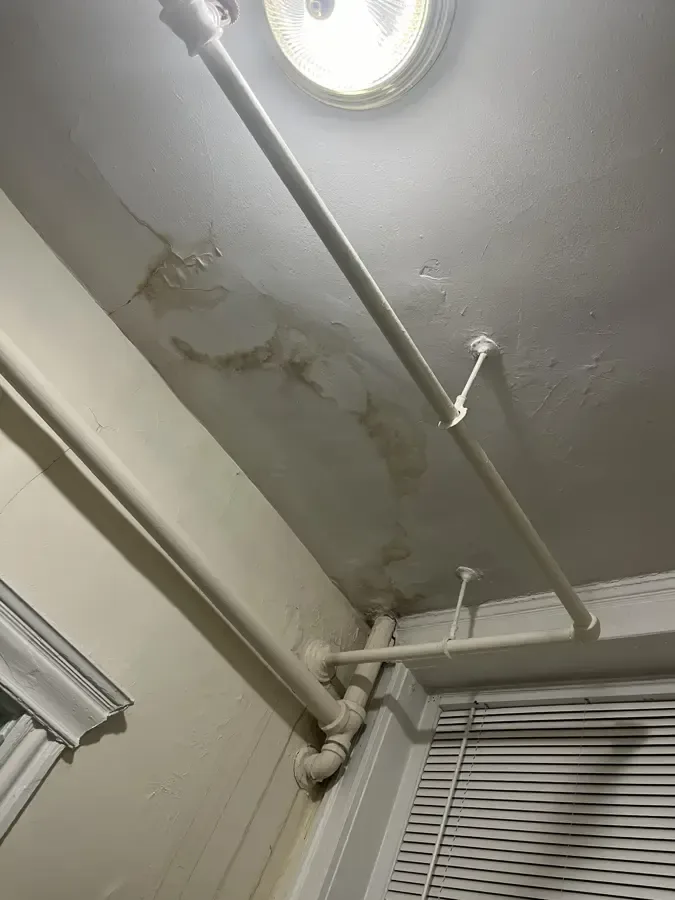
Late spring monthly precipitation in Warrensburg exceeds winter monthly precipitation. When a ceiling starts dripping during rain, the inspection needs to follow the water above the visible mark and check what changed at the property. Roof entry and plumbing from an upper room require different repairs, while both can leave insulation, ceiling finishes, and framing wet after the dripping stops.
Key takeaways
- A soft, sagging ceiling requires a restricted area beneath it.
- The timing of rain and fixture use helps organize source inspection.
- Ceiling stains need moisture checks beyond the visible outline.
- Roof or plumbing repair should be followed by a separate drying handoff.
Keep the space beneath a damaged ceiling clear
The first priority is the condition overhead. A swollen seam, drooping finish, or falling material can make the room unsafe even when the floor holds little water.
Occupants should use another route and avoid moving furniture beneath the affected section.
Puncturing a bulge or pulling down a loose edge can release water and material unexpectedly. The response team should assess the ceiling from a safe position before deciding how to access it.
Electrical fixtures within the wet area also need appropriate attention.
A brief description of the ceiling shape is more useful than calling every discoloration a roof leak. The ceiling water damage service starts with the overhead condition, the active drip, and the rooms that connect to the affected assembly.
- Close access beneath visibly loose ceiling sections.
- Note wet light fittings without touching or operating them.
- Photograph from the doorway or another stable dry position.
- Describe whether the drip is active, intermittent, or already stopped.
Match the first drip to what happened above
A timeline should record rain, wind observations at the property, fixture use upstairs, and the first visible water. The owner need not diagnose the source before requesting help.
Those observations allow the inspecting trades to choose useful starting points.
In a building near the University of Central Missouri, an upstairs room may be inaccessible until a separate occupant or manager arrives. Arranging that access early can prevent the inspection from stopping at the stained ceiling.
The authorized contact should identify which rooms can be entered.
A roof leak may appear after water has already traveled through an attic space. A plumbing leak may show when a fixture operates.
The inspection follows those possibilities physically, checking the path above the mark instead of deciding from timing alone.
Trace the roof path through the assembly
Where rain entry is suspected, a roof professional evaluates the exterior and any safe temporary protection. Interior observations identify wet sheathing, insulation, penetrations, and framing visible from an accessible space.
Nobody should climb onto a wet roof to chase a drip.
The source and the ceiling stain may sit in different positions because water can follow framing before it falls. Photographs should connect the entry location with the interior path.
This makes the repair conversation more precise than a photograph of paint discoloration alone.
The roof leak cleanup page distinguishes stopping weather entry from dealing with the water already inside. Ceiling restoration can proceed only with a plan for both, particularly when another rain period could wet the exposed materials again.
- Record the roof observation separately from the ceiling observation.
- Identify insulation that conceals the underside of the roof assembly.
- Label interior photographs by room and viewing direction.
- Keep temporary protection details with the permanent repair scope.
Investigate plumbing without opening every ceiling bay
If a bathroom, kitchen, or supply pipe sits above the stain, a plumber can examine the accessible connections and fixture behavior. A controlled investigation narrows the suspect area before finish removal.
Any testing should account for the damage already present below.
A failed drain connection and a pressurized supply leak behave differently. The cleanup team also needs to know what water contacted before reaching the ceiling.
That information affects containment, material handling, and the choice of cleaning methods in the lower room.
Openings should reveal the relevant connection or wet layer while preserving enough context for the repair record. An undirected series of holes creates more finish work without necessarily explaining the source.
Each opening should answer a question about access, condition, or water movement.
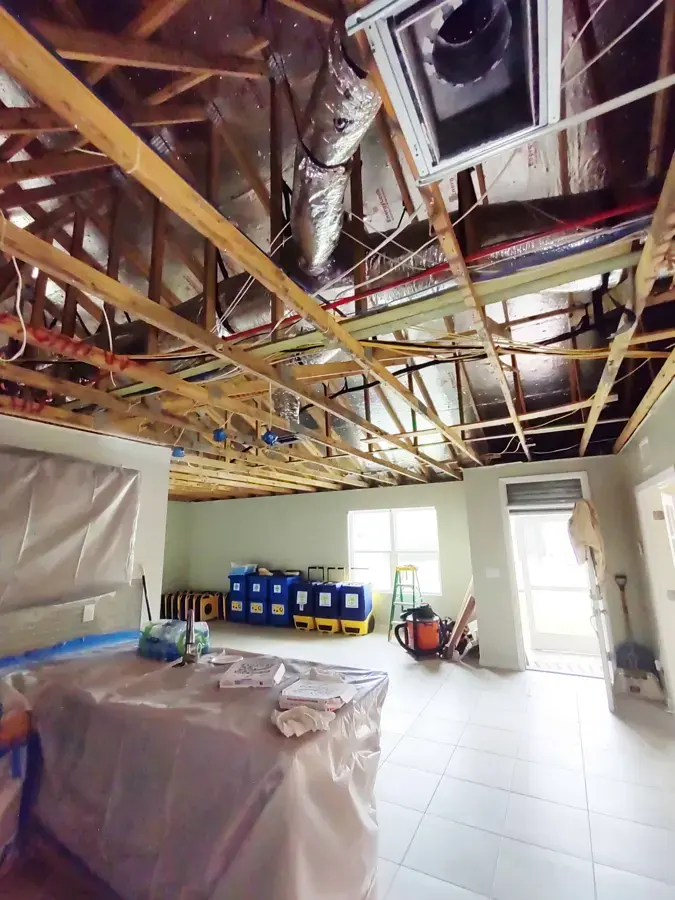
Measure beyond the ring left in the paint
A stain outlines where discoloration became visible, while moisture may extend into adjacent material. The technician checks a wider ceiling area and follows changes toward walls, corners, or the next room.
The wet boundary becomes a measurement map rather than a visual guess.
Materials above the finish may respond differently from the exposed face. Insulation, framing, and layered ceiling construction need separate retention decisions.
The condition of fasteners and attachment matters when a surface has softened or changed shape during the leak.
Appropriate comparisons with unaffected material help interpret the measurements. The crew should record the instrument and location so later readings answer the same question.
A dry surface reading in a different spot cannot stand in for the original wet point.
- Map the stain and the measured wet boundary as separate marks.
- Identify accessible layers above the decorative finish.
- Record loose attachment or deformation along with moisture results.
- Explain why each retained section can be reached by the drying setup.
Adapt equipment to the open ceiling and occupied rooms
Once access and material decisions are settled, airflow can reach the surfaces intended for retention. Dehumidification manages moisture released into the room air.
Occupied spaces need a walking route that avoids cords, work openings, and equipment discharge paths.
A ceiling cavity can remain damp even while the room below feels dry. Repeat material readings help identify that mismatch.
A slow response may require adjustment to access or equipment placement, followed by another check at the same marked points.
The structural drying process creates a record for the next contractor. That file should describe retained ceiling layers and exposed framing, with remaining finish work listed separately.
Equipment removal should follow measured progress rather than the disappearance of the drip.
Close the job with a source record and a ceiling record
The source repair file should explain where water entered and what was corrected. The interior file should show the affected rooms, removed material, retained layers, and final measurements.
Keeping both makes it easier to understand the work if a stain later reappears.
Before paint or ceiling replacement, the repair contractor should inspect attachment and the condition of the prepared area. A dry assembly can still need rebuilding where finishes distorted or lost strength.
Those repairs belong in the scope even after drying equipment leaves.
A followup observation during later rain can be useful when weather entry caused the loss. The property contact should note any renewed dampness at the original location and report it promptly.
Fresh water requires a new source check rather than another coat of paint.
Questions
Why can the drip appear away from the roof opening?
Water can run along a framing member or across a layer before dropping onto the ceiling. The inspection connects exterior observations with the interior path so the contractor can address the entry point and the wetted assembly.
Is an old stain enough to decide on removal?
Removal depends on the present moisture, attachment, contamination, and access needs of the ceiling. A contractor should explain the observed condition and the reason for opening or retaining that specific section.
Should a homeowner drain a bulging ceiling?
The area beneath a bulge should stay clear while qualified help assesses it. Deliberately releasing trapped water can also bring down loosened material, particularly where electrical fixtures or damaged attachment are involved.
What makes a useful ceiling repair handoff?
The next contractor needs the source correction, photographs of concealed layers, drying results, and the dimensions of the repair area. The handoff should also identify any remaining opening or damaged finish requiring replacement.